A Guide to Air Circuit Breaker (ACB) Protection Settings and Applications
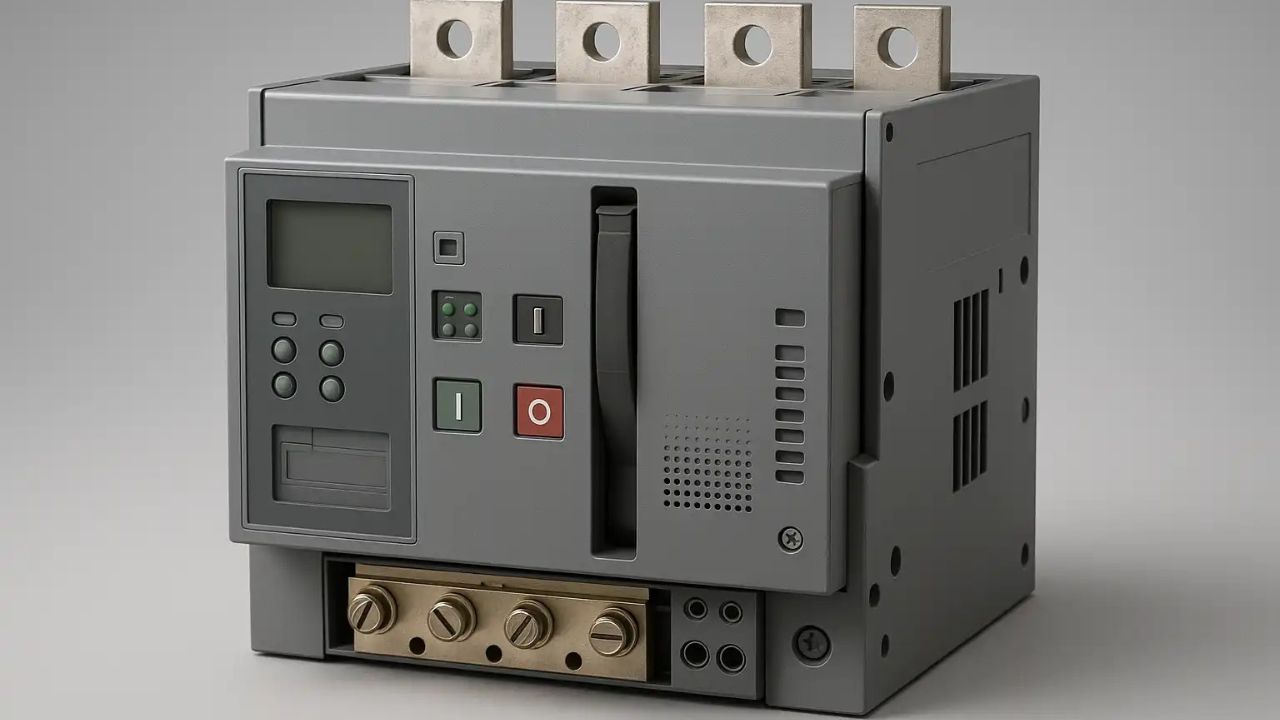
An Air Circuit Breaker (ACB) is not just a mere switch but the main safety element of the modern electrical low-voltage distribution system. Customers use ACBs to safeguard key devices, avoid disastrous faults, and achieve operational stability. The key element in the correct operation of an ACB is its protection settings, usually called LSIG. Knowledge of lsig breaker plays a vital role in the mind of an engineer, maintenance crew, and facility managers who have the intention of realizing the best reliability of the system.
Understanding LSIG
LSIG is an abbreviation that is used to denote four basic forms of current-based protection incorporated within an Air Circuit Breaker. The letters are used to indicate the protection functions: L means Long-Time overload protection, S means Short-Time short-circuit protection, I means Instantaneous short-circuit protection, and G means Ground Fault protection. Together, these four layers constitute the main parts of the ACB protection, as the faults have to be observed and isolated before they can develop into the major failures of the system.
Long-Time Protection (L)
The letter L refers to Long-Time protection, which acts as the initial defence against permanent overload currents. This function protects cables, busbars, and equipment against any currents that may be more than the current’s normal operating level but not high enough to result in an immediate short circuit. The ACB bases the sustained current and trips on an inverse-time curve, with higher overloads tripping faster. A thermal memory is also incorporated in this protection, and this enables the breaker to consider cumulative stress due to recurrent minor overloads. Proper configuration of Long-time protection will warrant the electrical systems to run safely in continuous load conditions without unreasonable failures.
Short-Time Protection (S)
Short-Time protection is developed to handle moderate short-circuits without being selective of the system. This feature contrasts with the instantaneous protection in that it creates a momentary delay to tripping, which permits local faults to be circumvented by downstream protective devices, such as Miniature Circuit Breakers (MCBs) or Moulded Case Circuit Breakers (MCCBs). Small problems will not lead to a complete closing of the system due to this delay. Short-Time protection, when coordinated with Zone Selective Interlocking (ZSI), may also be used in modern ACBs, where breakers are allowed to communicate with each other to ensure that only the nearest breaker to the fault trips instantly.
Instantaneous Protection (I)
An Air Circuit Breaker has an emergency mechanism known as instantaneous protection. It does not have a deliberate delay in time operation and is activated when very high fault currents are observed. The main role of this functionality is to avoid the devastating effects of both the breaker and the connected system. Instantaneous protection is not selective, but provides speed in order to interrupt the fault as quickly as possible to reduce risk. The threshold of this function is normally established as a number of times the nominal current of the breaker depending on the needs of the system or the fault level.
Ground Fault Protection (G)
Ground Fault protection protects personnel and equipment against currents leaking to the earth. Such currents can be below the protection threshold set by overload or short-circuit, but still be very dangerous, such as electric shock and fire. ACBs detect ground faults by measuring either residual current (the total of all the phase currents is not zero) or by directly measuring current in the neutral line. Ground Fault protection is particularly important in the industrial and commercial world, which includes safety and adherence to the electrical codes.
The use of LSIG in Practical situations
Use of LSIG functions will vary depending on the nature of the equipment in question. Full LSIG protection is used in main incomers where a fault is confined with no interruption of a healthy circuit. Directional protection is necessarily needed on bus tie breakers in order to support parallel sources. Generator circuit breakers are designed to provide LSIG plus voltage, frequency, and reverse power protection to avoid instability in the motoring and the system. In the case of motor feeders, a balance and phase sequence is important to avoid overheating and mechanical destruction. Carefully setting LSIG settings also helps even data centre power distribution units because high harmonics and sensitive IT loads require a high degree of neutral and overload protection.
Conclusion
Air Circuit Breaker protection is based on LSIG, which offers a layered protection against overloads, short circuiting, and ground faults. Knowing and properly setting the Long-Time, Short-Time, Instantaneous, and Ground Fault protection enables engineers to increase the safety, reliability, and resilience of systems. With the help of such features as the advanced functions depending on the specific applications, LSIG guarantees that the electrical systems work effectively and reduces the chances of downtime and damage to the equipment to a minimum.