Why the Throw Pillow You're Using Probably Isn't Doing What You Think It Is
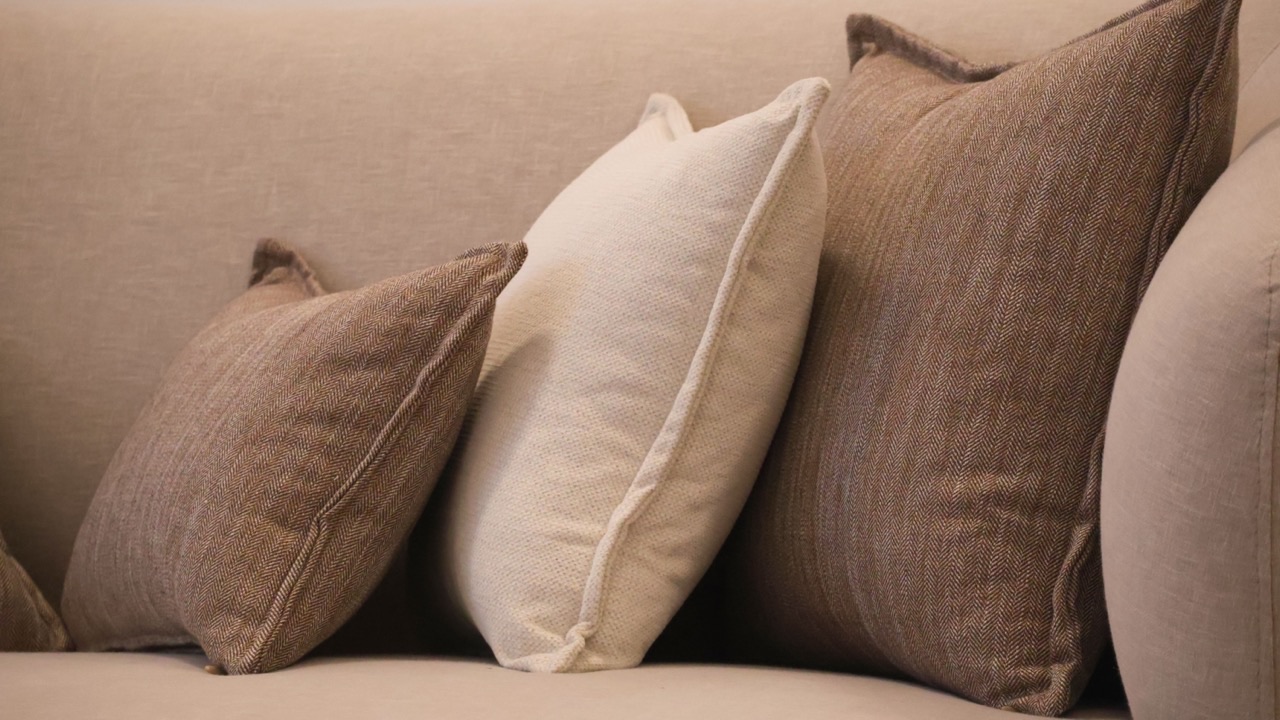
Most people choose throw pillows based on color and pattern. They pick something that matches the couch, or adds contrast, or looks like what they saw in a room they liked. The pillow goes on the sofa, the room looks better, and that’s usually where the thought process ends.
But throw pillows actually do several things simultaneously, and most of the inexpensive ones fail at most of them. The failure is gradual enough that it’s easy to adapt around it — you stop leaning on the pillow because it’s too flat, you reposition the ones that always fall over, you stop noticing that the covers have started to look slightly worn. By the time you register that the pillows aren’t working, you’ve already been living with an inferior version of the room for months.
What a throw pillow is actually supposed to do
There are three functions, and they’re distinct enough that a pillow can succeed at one while failing at the others.
Structural support: a throw pillow placed at the corner of a sofa or behind your back while reading is providing actual lumbar or arm support. For this to work, the pillow needs to hold its shape under pressure. It can’t be too soft or too flat — it has to offer some resistance and then recover to its original shape when you stand up. A pillow that starts firm and goes flat within three months isn’t providing structural support; it’s providing the illusion of it.
Tactile comfort: you touch throw pillows. You lean against them, you hug them, you move them out of the way, you hand them to someone. The surface material matters beyond what it looks like. A scratchy polyester cover that photographs well is not comfortable to lean your face against. A cover that pills after a few months of contact doesn’t feel good and doesn’t look good. This is where cover material makes or breaks the object.
Visual anchoring: the decorative function is real, but it’s more nuanced than “does it match the room.” Pillows that have sagged, bunched, or shifted out of square undermine the visual effect even if the color is right. A pillow that holds its shape and retains its surface texture contributes to a room that looks considered; a pillow that has deformed over time does the opposite.
Where cheap pillows fail
The most common failure is the insert. Cheap pillow inserts — typically low-density polyester fill — compress within months of use and don’t spring back. A pillow that was 20 inches square starts looking 18 inches square in one dimension and lumpy in the other. You can plump it temporarily, but it won’t hold the shape.
The fix for this — regardless of what cover you use — is the insert quality. A down or down-alternative insert with higher fill power holds its shape significantly longer than low-density polyester. A feather-and-down blend is slightly less expensive than down alone and holds shape reasonably well. A cheap polyfill insert will compress regardless of what cover goes over it.
The second most common failure is the cover. Polyester covers that look fine in photos tend to pill within a few months of contact with skin and clothing. The pilling happens at the areas of highest friction — the center where you lean against it, the corners where it slides against the sofa. Once pilling starts on a pillow cover, it can’t be fully reversed; you can use a fabric shaver to remove current pills, but the surface will continue to generate more.
Natural fiber covers — wool, cotton canvas, linen — are more resistant to pilling because the fibers are longer and more tightly spun. They tend to have a more textured, less uniformly smooth surface than polyester covers, which also makes them more forgiving of imperfections: a slight irregularity in a linen weave is part of the material’s character; the same irregularity in polyester looks like a manufacturing defect.
The fill question for structural function
If you’re using throw pillows for actual support — reading, watching TV, lying on the sofa — the firmness and density of the fill matters specifically. A very soft down pillow that conforms to whatever you lean against it doesn’t provide lumbar support; it just moves out of the way. A denser fill — higher fill power down, or a down-and-feather blend at higher feather percentage — provides more resistance and is more useful structurally.
The tradeoff is that firmer fill holds its shape better decoratively but is less comfortable to hug or lie against. Most households benefit from having pillows in both categories rather than treating them as interchangeable.
What makes a throw pillow worth the price
A luxury throw pillow should be distinguishable from a cheap one in two ways that actually matter: the insert holds its shape over two or more years of regular use, and the cover maintains its surface texture over the same period. If a pillow costs significantly more and doesn’t deliver on both of those, it’s a decorative markup rather than a quality premium.
The markers that correlate with genuine quality: fill power or fill weight disclosed (not just “premium fill”), cover material specified with fiber content rather than just color description, and a brand that provides care instructions reflecting an understanding of what the material actually needs.
A wool cover pillow specifically is worth understanding in this context. Wool is more resistant to pilling than most synthetics, handles moisture from skin contact better, and develops a slight patina with use rather than degrading. It’s also warmer in winter and less clingy in summer than synthetic covers, for the same reasons wool blankets work year-round. The weight and texture of a wool cover feels different in your hands than polyester — denser, more substantial, with a surface that holds consistent across the whole cover rather than going slightly shiny at high-touch points.
The compounding effect
The room impact of throw pillows accumulates over time. Pillows that hold their shape and surface make the sofa look considered and well-maintained even when nothing else has changed. Pillows that have deformed and pilled make the same sofa look neglected even when everything else is clean.
This sounds like a minor point, but the average person sits in a living room for thousands of hours per year. The quality of what they’re looking at and touching during those hours compounds in a way that doesn’t always register consciously until you change something and notice the difference.